
The New Era of Corporate Spend Management
Brex vs Ramp is more than a choice between two corporate cards; it’s a decision that shapes how your startup manages expenses, controls spending, and scales financial operations.
Quick Answer for Brex vs Ramp:
- Brex: Best for VC-backed startups needing integrated banking, higher credit limits, and travel rewards.
- Ramp: Best for bootstrapped businesses prioritizing cost savings, simple cashback, and expense automation.
- Key Difference: Brex offers comprehensive financial services; Ramp focuses purely on spend management.
- Requirements: Brex needs $50K+ cash or VC funding; Ramp needs a $25K minimum bank balance.
- Rewards: Brex uses a points system (up to 7x); Ramp offers flat 1.5% cashback.
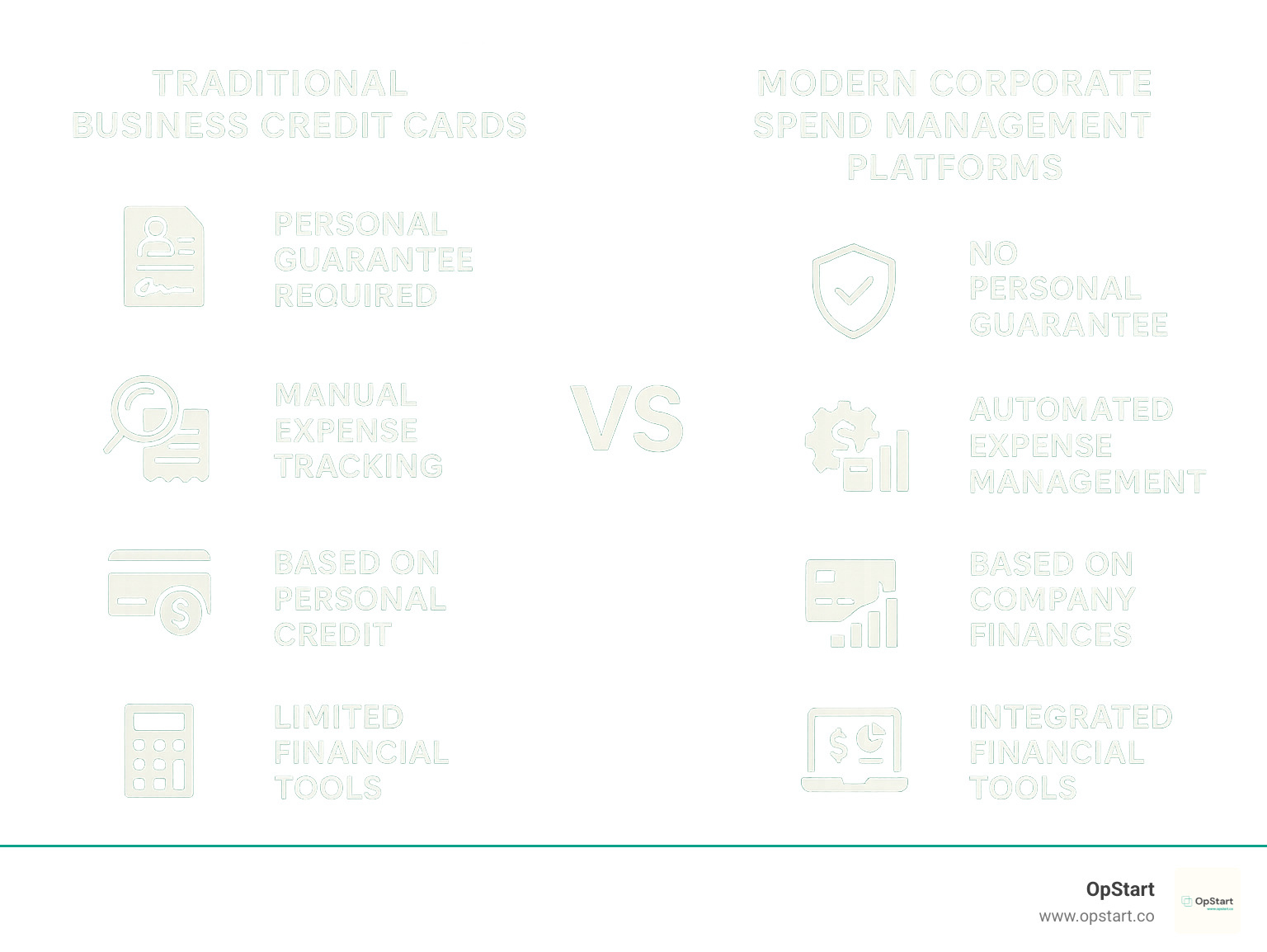
The days of traditional business credit cards requiring personal guarantees and offering little expense control are over. Modern platforms like Brex and Ramp have revolutionized startup finances.
Imagine landing a major client. Suddenly, your team is booking flights, paying vendors, and managing new expenses. Without the right tools, this growth becomes an administrative nightmare.
Both platforms eliminate personal guarantees, offer unlimited virtual cards, and provide sophisticated expense management tools traditional banks can’t match. Choosing between them requires understanding your company’s specific needs, funding, and growth trajectory.
Having scaled operations at high-growth companies, I’ve seen how the Brex vs Ramp decision impacts financial efficiency. At OpStart, we help founders make these critical infrastructure choices for operational success.
Brex vs Ramp: At-a-Glance Comparison
The Brex vs Ramp conversation is a daily one for founders choosing a corporate card. Both platforms have transformed startup finances, but with different approaches. Brex built a comprehensive financial ecosystem for high-growth companies, while Ramp focused on efficient expense management for any business.
| Feature | Brex | Ramp |
|---|---|---|
| Target Audience | VC-backed startups, enterprise companies, businesses with significant funding or revenue. | Incorporated/registered companies (not sole proprietors), businesses with at least $25,000 in the bank. |
| Rewards | Points-based: 7x rideshare, 4x travel (Brex portal), 3x restaurants, 2x software, 1x others. | Flat-rate 1.5% cashback on all purchases. |
| Banking | Integrated cash management account with checking-like features, high APY, and FDIC coverage up to $1M. | No integrated banking; requires banking elsewhere. Offers high-yield Treasury/Investment accounts. |
| Fees | No annual or foreign transaction fees for basic card. Brex Empower ($12/user/month) for advanced features. | No annual or foreign transaction fees. Ramp Plus ($12/seat/month) for advanced features. |
| Best For | Funded startups, high-growth tech companies, those with significant travel/dining spend, or needing integrated banking. | Bootstrapped SMBs, established businesses, companies prioritizing simple cashback and robust expense automation. |
| G2 User Rating | 4.7 out of 5 stars (1,428 reviews) | 4.8 out of 5 stars (2,089 reviews) |
While Ramp edges out Brex slightly on G2 with a 4.8/5 rating versus 4.7/5, both scores are impressive. The key difference lies in their target audiences. Brex is designed for VC-backed startups wanting an all-in-one financial platform. Ramp is built for any incorporated business with $25,000 in the bank, prioritizing efficient expense management.
Their rewards structures reflect this. Brex’s points system rewards high-growth startup spending (travel, software), while Ramp’s flat 1.5% cashback is simple and works for everyone.
For more details, you can Compare Ramp vs Brex on G2. The question isn’t which is better, but which fits your business now.
Deep Dive: Core Features and Financial Tools
Choosing between Brex vs Ramp means looking beyond surface features to what matters for daily operations.
Expense Management and Automation
Both platforms eliminate manual expense reports. Their premium tiers, Brex Empower and Ramp Plus (around $12/user/month), are AI-powered financial assistants.
AI-powered budgets and policy audits are a core strength. Ramp boasts over 50 AI-driven policy checks to catch questionable expenses early. Automated receipt capture is another time-saver, with Ramp holding a slight edge (9.6 vs. 9.4 G2 rating) for reliability.
For employee reimbursement, Ramp also leads slightly (9.4 vs. 9.2 G2 rating), meaning faster payouts. Digital receipt management is seamless on both, automatically matching receipts to transactions. This level of automation is transformative, freeing up your team for strategic work. For help building robust financial operations, see our startup accounting support services.
Rewards Programs: Points vs. Cashback
The right rewards strategy can significantly impact your bottom line.

Ramp’s 1.5% cashback is simple: every purchase earns 1.5% back, with no category tracking. This consistency is valuable for businesses with diverse spending.
Brex’s points system is more complex but potentially more rewarding if your spending aligns with its bonus categories: 7x on rideshare, 4x on travel (via their portal), 3x on restaurants, 2x on software, and 1x on everything else. For startups with heavy spending in these areas, Brex’s rewards can deliver higher returns.
The choice depends on your spending patterns. If you rarely travel and have varied expenses, Ramp’s simplicity wins. If you’re a high-growth startup with significant startup spending habits in Brex’s bonus categories, the points system could be more lucrative.
Credit Limits, Underwriting, and Financing
The no personal guarantee requirement on both platforms is a feature, making them superior to traditional business cards by protecting your personal assets.
Brex credit limits are generous for funded startups, with underwriting based on cash balance and venture funding. Monthly repayment typically requires at least $100k in angel investment and $50k in cash.
Ramp credit limits are also dynamic, with more accessible qualification requirements—just $25,000 in the bank—making them ideal for bootstrapped companies.
Ramp Flex is a unique financing tool that lets you pay vendors now and have your account debited 30, 60, or 90 days later for a fee. It’s a valuable option for managing cash flow during growth periods. Both platforms base underwriting on business fundamentals, not personal credit scores. For more on cash management, see our guide on cash vs. accrual accounting.
Banking, Cash Management, and International Support
This is where the platforms’ philosophies diverge most.
Brex’s business account is a full-service banking solution with no monthly fees, high yields on cash (up to 4.90% APY), and expanded FDIC coverage up to $1 million. This integrated approach simplifies reconciliation and month-end closes. Brex also handles bill pay and global cards with multi-currency support.
Ramp’s Treasury account offers high-yield options (around 3.96% for Treasury) without replacing your primary bank. This lets you optimize idle cash while keeping existing banking relationships.
For international support, both platforms are strong. Brex offers global payments and multi-currency support, while Ramp provides international reimbursements in over 70 countries. The choice is between an integrated finance stack (Brex) or specialized tools with separate banking (Ramp).
Who Should Choose Brex? And Who Should Choose Ramp?
Choosing between Brex vs Ramp means matching the platform to your company’s DNA, growth stage, and financial priorities. Brex acts as a financial partner for the venture-backed journey, while Ramp is a laser-focused expense optimization expert.
The Ideal Brex Customer: VC-Backed & Global Startups
Brex is built for funded, high-growth companies. The ideal customer is a venture-backed startup with significant angel investment or VC funding, typically needing at least $50,000 in cash to qualify. In return, Brex offers credit limits and features designed to scale with ambitious growth.
High-growth tech companies benefit from Brex’s rewards: 7x points on rideshare, 4x on travel, 3x on restaurants, and 2x on software. Aligning spending with these categories can significantly reduce burn rate.
The integrated finance stack is a major draw. With banking, cards, and expense management under one roof, reconciliation is simplified. Companies with international operations also find its global cards and multi-currency support essential.
Brex’s trade-offs include stricter eligibility, making it unsuitable for many SMBs. The points system requires strategic spending to maximize, and some businesses may face daily repayment requirements. If you’re a venture-backed company seeking a comprehensive financial partner, you can Visit Brex’s Website.
The Ideal Ramp Customer: Lean SMBs & Established Businesses
Ramp’s platform is accessible to a broader range of businesses, focusing on simplicity and cost savings. The typical customer is an incorporated business with at least $25,000 in the bank, making it ideal for bootstrapped companies.
Cost-conscious businesses prefer Ramp’s straightforward flat 1.5% cashback, which is predictable and applies to all purchases. Its expense automation capabilities also stand out, with AI-powered recommendations that help find savings.
Ramp Flex is a unique financing tool that allows you to extend payment terms with vendors for a fee, which can be a game-changer for managing cash flow.
Considerations with Ramp include the lack of integrated banking, so you’ll need a separate primary bank account. However, its high-yield Treasury accounts offer a good way to optimize idle cash. Ramp is also unavailable to sole proprietors. For businesses that value simplicity and powerful expense automation, you can Visit Ramp’s Website.
The choice comes down to needing a comprehensive financial platform (Brex) or a focused spend management solution (Ramp). Both are superior to traditional cards, eliminating personal guarantees and offering modern expense controls.
Platform Experience: Integrations, Support, and Security
The day-to-day experience of a corporate card platform is critical. Practical considerations like software integration, customer support, and security often matter most.
Software Integrations for a Seamless Workflow
Both Brex vs Ramp integrate seamlessly with the tools you already use. They offer robust integrations with QuickBooks Online, NetSuite, and Xero, with identical 9.3 G2 scores for integration. Users note that Brex’s setup feels slightly more intuitive.
Both platforms offer automated data sync, categorizing expenses and syncing transaction data in real-time with your accounting system. This automation can slash month-end close times from days to hours.
Ramp particularly excels in Procure-to-Pay and AP Automation, offering features that can streamline complex purchasing workflows. The right integrations make financial operations hands-free. For more on streamlining your finances, see our guide on Bookkeeping for Startups.
A Look at the Brex vs Ramp Customer Support and UX
Responsive customer support is crucial when issues arise.

Brex offers 24/7 live support, a major benefit for global teams (G2 Quality of Support: 9.3). Ramp’s support is primarily chat-based and not always 24/7, but is still highly rated (G2 score: 9.2).
For user experience, both platforms score an impressive 9.5 for Ease of Use on G2. However, Ramp has a slight edge for Ease of Admin (9.4 vs. 9.2), suggesting it’s marginally easier for finance teams to manage.
Both have excellent mobile apps (Brex: 4.9 stars, Ramp: 4.7 stars on Apple App Store). Brex excels at travel expense management, while Ramp’s employee reimbursement process is highly efficient. Ramp also outperforms on virtual cards (9.5 G2 score vs. Brex’s 8.9), making it better for managing subscriptions.
Security and Compliance Standards
Both platforms take security seriously. SOC 2 Type II compliance is standard, verifying their controls over data security and privacy. Bank-level encryption protects your information in transit and at rest.
FDIC insurance coverage differs: Ramp offers standard coverage through partner banks, while Brex’s integrated cash account extends FDIC insurance up to $1 million, a major advantage for companies with large cash balances.
Both platforms provide robust fraud prevention and customizable card controls, allowing you to set individual spending limits and prevent unwanted charges before they happen.
Frequently Asked Questions about Brex vs Ramp
Here are answers to the most common questions about Brex vs Ramp.
What is the main difference between Brex and Ramp?
The main difference is scope. Brex aims to be an all-in-one financial platform, while Ramp is a dedicated spend management tool.
Brex combines corporate cards, expense management, and integrated banking with high APY rates and bill pay. It’s for founders who want to consolidate their financial stack.
Ramp focuses on controlling costs and automating expenses. You keep your banking separate but gain powerful spend controls and simple 1.5% cashback rewards. The need for integrated banking is the key differentiator.
Do Brex or Ramp require a personal guarantee?
No. Both platforms offer cards with no personal guarantee, which is a significant advantage over traditional cards. This protects your personal assets by reducing founder liability. Underwriting is based on your business’s financial health, not your personal credit score, which is crucial for healthy startup growth.
Which card is better for a new startup?
The best card depends on your startup’s funding and stage.
VC-funded startups often prefer Brex. Its eligibility criteria and higher credit limits are designed for companies with venture or angel investment. The integrated banking simplifies the financial stack for fast-moving teams.
Bootstrapped startups may find Ramp a better fit. The $25,000 bank balance requirement is more accessible. Ramp’s simplicity and cost control, with its flat 1.5% cashback and spend optimization, are ideal for stretching every dollar. The choice depends on your funding and whether you need integrated banking.
The Verdict: Which Platform Reigns Supreme?
In the Brex vs Ramp debate, there’s no single winner. The best choice depends on your company’s specific needs.
The decision comes down to a few key factors:
- Funding Status: Brex is ideal for VC-backed startups, offering higher credit limits based on funding. Ramp is more accessible for bootstrapped businesses, requiring only a $25,000 bank balance.
- Financial Complexity: Brex offers an all-in-one solution with integrated banking. Ramp is a best-in-class spend management tool that works with your existing bank.
- Spending Habits: Brex’s points system rewards travel and software spending. Ramp’s flat 1.5% cashback is simple and predictable for all types of expenses.
- Business Stage: Brex is a go-to for early-stage, funded startups scaling quickly. Ramp often attracts more established businesses focused on cost control.
At OpStart, we know the right choice is about which platform fits your business operations. Both are a massive leap from traditional cards, eliminating personal guarantees and automating expense management. You’re not locked in forever; you can adapt as your business evolves. The key is to choose the platform that supports your current stage and future growth.
Ready to build a financial stack that works for your startup? Learn more about the complete startup financial stack and see how OpStart can help you implement these tools seamlessly.